What Is Human Factors?
The engineering discipline that proves real people can use a medical device safely, correctly, and without confusion — before it ever reaches a patient.
What Human Factors Actually Involves
Human factors activities broadly consist of:
- Iterative testing with representative users
- Risk analysis & requirements work
- Maintenance of the Usability Engineering File
- Validation with production equivalent devices
However, this description hides the work of:
- Constant cross-functional alignment
- Playing project manager for small details
- Travel
- Setting up labs
- Ensuring good data capture
- Advocating for user needs in the face of engineering or leadership pressure
For Class II and Class III devices, human factors isn't optional. Regulatory bodies require it, full stop. It is one of the most expensive medical device development activities globally.
What's changing now: Class I devices are starting to need human factors activities too. Hospitals and payors are increasingly asking for human factors evidence before they'll purchase or reimburse a device — regardless of what the FDA technically requires.
"90% of human factors reports submitted to the FDA are flagged as deficient."— Medical Device Academy, 2023
Mandatory Human Factors Tasks
Formative Studies
Early, iterative testing that catches use errors while the design can still change cheaply — long before anything is locked in.
Real Users, Real Conditions
Clinicians, patients, and caregivers testing the device the way it's actually used — not a simplified, best-case demo.
Use-Related Risk Analysis
Mapping every way a device could be misread, mishandled, or misused, then designing those failure points out.
Summative Validation
The final, FDA-required study proving the design is safe for its intended users — the last gate before submission.
Project Management
Juggling timelines, budgets, and stakeholders across every study, often with no dedicated project manager to lean on.
Advocating for User Needs
Standing firm for the end user's real-world experience, even when it means pushing back on engineering or business pressure.
Multiple Projects at the Same Time
Context-switching between several device programs at once, each with its own deadlines and regulatory stakes.
Tour the Tedious Human Factors Study Workflow Now
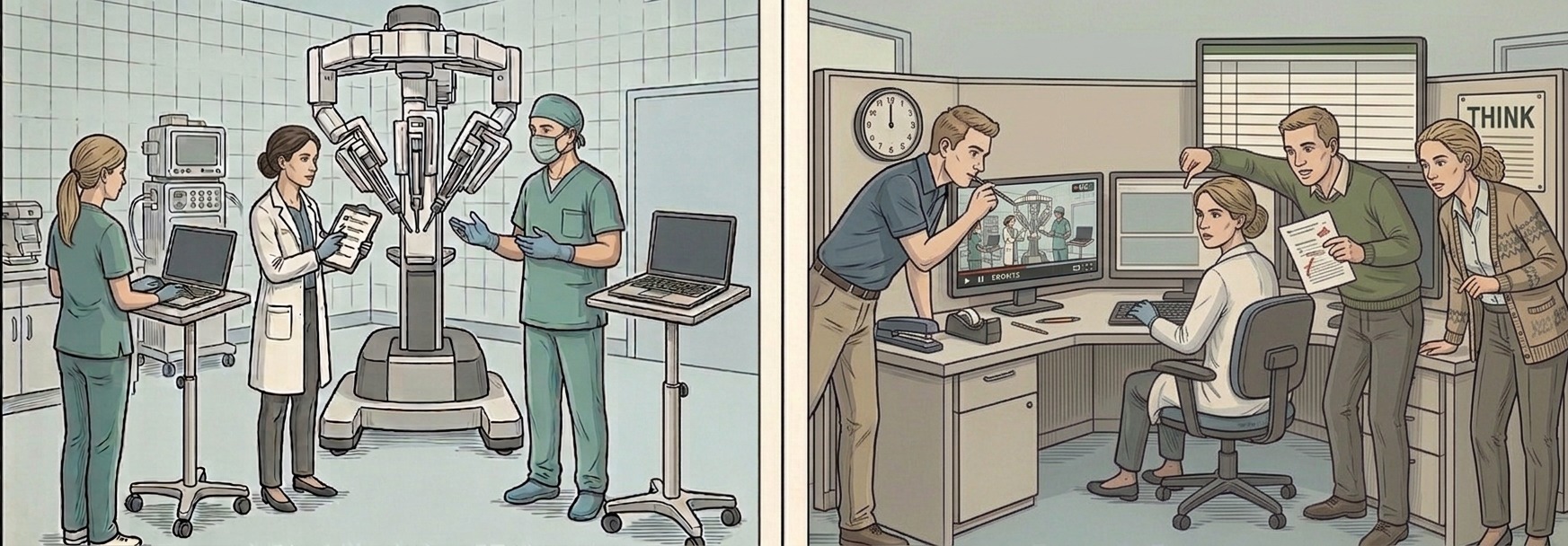
One month later....
The Documentation Has Not Changed.
The Time Required to Produce It Is About To.
Get Submitta into your environment, deliver real impact, and accelerate your path to market.